Month-by-Month Minnesota Garden Care and Planning Guide
Minnesota’s long winter, uneven spring thaw, and short growing season make a fixed planting calendar unreliable. This month-by-month plan helps you decide what to do next—from indoor seed starting and spring bed preparation to fall cleanup—while accounting for regional and weather differences.
How to use a Minnesota garden calendar
Treat the months below as planning cues, not deadlines. Minnesota spans a large area, and spring arrives at different times across the state. Soil may be workable in one yard while remaining cold and wet in another. Even nearby gardens can differ because of shade, elevation, wind exposure, and the way cold air settles.
Use three checks alongside the calendar:
- Your region: Northern Minnesota usually warms later than southern Minnesota. A schedule that works in the Twin Cities may be too early farther north. Northern Versus Southern Minnesota: Adjusting Planting Schedules
- Your garden’s conditions: Sun, drainage, soil texture, and nearby structures all affect when a bed is ready. A sunny raised bed may warm faster than a low, shaded patch of heavy soil.
- Current conditions: Check soil moisture and temperature before sowing or digging. Soil that sticks to a shovel or forms a wet clump is often too wet to work without damaging its structure. When Is Minnesota Spring Soil Dry Enough to Work?
Frost dates can help you think about risk, but they are probabilities rather than promises. A forecasted warm spell does not guarantee that tender plants are safe outdoors, and a predicted frost does not mean every yard will reach freezing. Minnesota Frost Dates: Tracking Spring Thaw and Fall Freezes
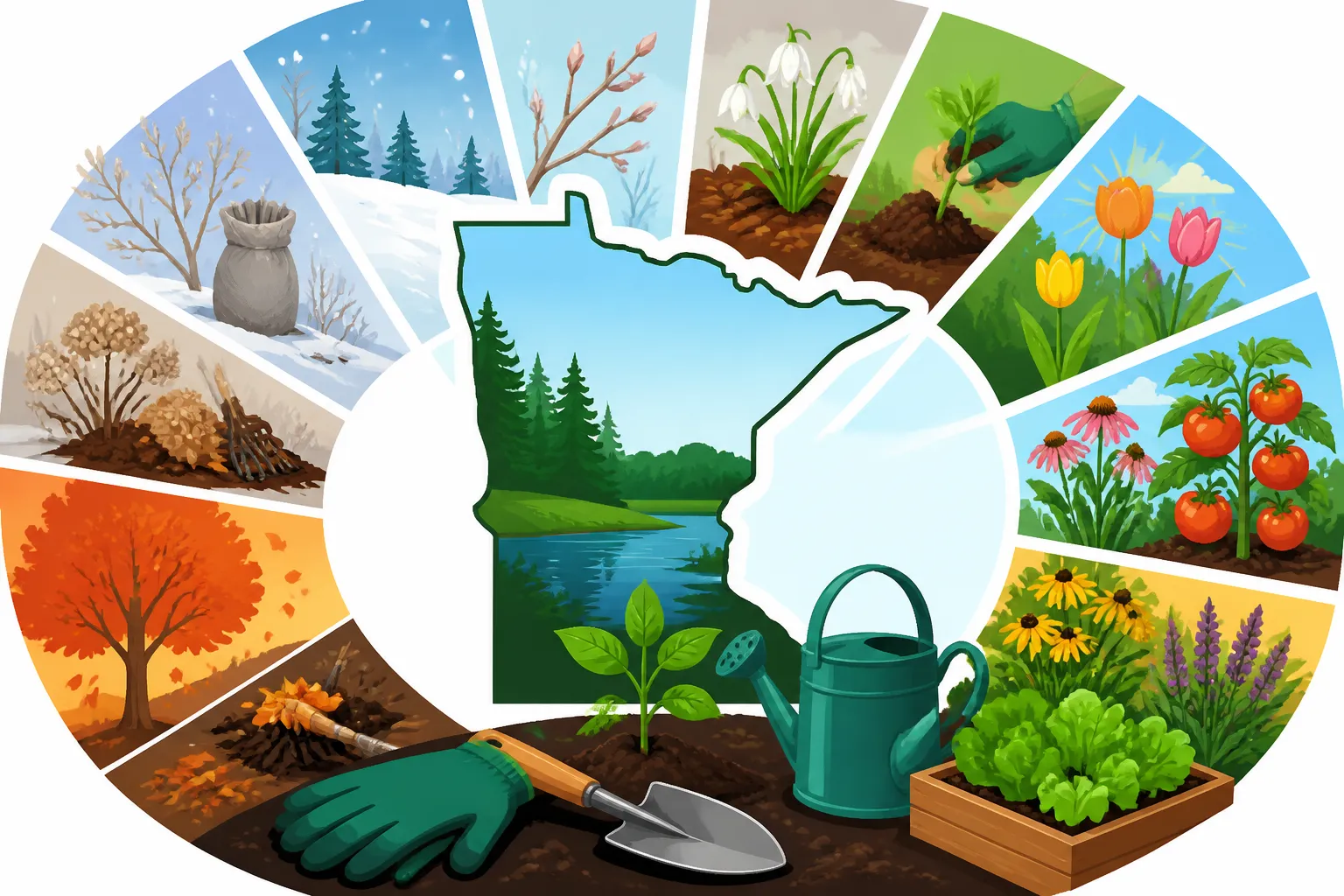
| Part of the year | Main garden focus | A useful check before acting |
|---|---|---|
| Winter | Plan, order seeds, inspect supplies, protect stored tools | Does the plan match your space and available light? |
| Early spring | Start seeds, check beds, plant cold-tolerant crops when conditions allow | Is the soil workable, not just thawed at the surface? |
| Late spring | Harden seedlings and plant warm-season crops when soil and weather are suitable | Are nights and soil warm enough for the crop? |
| Summer | Water, harvest, manage weeds, and sow selected crops for fall | Is moisture reaching the root zone? |
| Fall | Harvest, plant suitable bulbs, prepare beds, and protect vulnerable plants | Is there enough time for roots to establish before the ground freezes? |
A useful calendar also leaves room for changing plans. If a cold, wet spring delays planting, prioritize crops that need the longest season and hold off on working saturated soil. If a warm spell arrives early, do not assume it will last. Why an Early Spring Warm Spell Can Trick Minnesota Gardeners
January through March: plan, organize, and start indoors
Winter is a good time to make decisions that prevent rushed work later. The garden is resting, but your choices about crop selection, seed timing, and bed layout can make the next season easier to manage.
January: review and make a workable plan
Begin with what you learned last season. Note which beds dried out quickly, where water collected, which crops produced well, and what became difficult to maintain. If you kept a garden notebook, use it to record crop locations and approximate harvest periods. Even a simple sketch can help you avoid placing the same crop family in the same bed every year.
Plan around the space and time you actually have. A smaller, well-maintained vegetable bed is usually easier to water and weed than a large plot that becomes difficult to keep up with in midsummer. Decide which crops you want fresh, which you want to preserve, and how much room larger plants will need. For small patios, Planning Small Raised Beds and Planters for Tight Minnesota Patios can help you think through containers and limited space.
Review seed packets and stored supplies before buying more. Check that seed packets are labeled, dry, and in usable condition. Make a list of missing items such as trays, potting mix, plant labels, row-cover supports, or a soil thermometer. A thermometer is especially helpful when deciding whether soil is warm enough for a particular crop; air temperatures alone do not tell you what roots will experience. How Soil Thermometers Reveal True Seed Readiness in Minnesota
If you plan to grow perennials, shrubs, or trees, use winter to check mature size, light needs, and soil preferences. A plant that looks small at the nursery can eventually crowd a path or compete with nearby plants. Match the plant to the site rather than assuming the site can be changed easily.
February: check seed-starting needs
February is often a planning month, but it is also when some gardeners begin indoor seed sowing. Start only crops that benefit from an early indoor start and that you can grow under suitable light. Sowing every crop early can leave you with oversized, root-bound seedlings long before outdoor conditions are ready.
Read each packet for the crop’s recommended indoor-starting period and days to maturity. Then work backward from the expected outdoor planting window for your region. Keep in mind that indoor seedlings need enough light, steady moisture, and room as they grow. A sunny window may not provide enough light for sturdy starts, especially during a Minnesota winter.
Clean reused trays and pots before sowing. Label each container with the crop and sowing date so seedlings do not become a guessing game later. Use a seed-starting mix suited to containers, and avoid keeping it constantly saturated. Poor drainage and overly wet media can cause seedlings to struggle.
If you are deciding whether to start seeds yourself or buy transplants, consider the crops, growing space, and time you can devote to indoor care. Starting Vegetable Seeds vs Buying Transplants for Minnesota Gardens explains the trade-offs. For a broader schedule, see Indoor Sowing Schedules for Minnesota Early Spring Transplants.
March: sow selected crops and prepare for spring
As daylight increases, indoor seedlings grow more quickly. Check them frequently for adequate light, moisture, and airflow. If seedlings stretch toward a window or develop weak stems, light may be inadequate. Avoid crowding trays together where air cannot circulate.
Start only the crops whose timing fits your garden. Some vegetable seedlings need more time indoors than others, and seedlings held too long can be harder to transplant successfully. If you are growing brassicas, follow a crop-specific schedule rather than sowing them all at once. Starting Minnesota Broccoli and Cauliflower Indoors in Early March offers a focused example.
March is also a good time to inspect garden tools, sharpen or clean them as appropriate, and check stored hoses and watering equipment for damage. Review any protective materials you plan to use, including row covers, low-tunnel hoops, or cold-frame lids. Make sure covers can be secured against wind and removed or opened when conditions require it.
Outside, resist the urge to dig simply because the snow is gone. A bare-looking bed may still be saturated below the surface. Check the soil itself before walking or working in it. If it smears, sticks heavily to tools, or compresses into a dense clod, give it more time to dry. Testing Garden Soil for Sticky Spring Moisture Before Digging
April through May: work with the soil and pace spring planting
Spring is the busiest period for many Minnesota gardeners, but it is also when patience matters most. A calendar can suggest what to prepare; soil condition and crop tolerance determine when to proceed.
April: check beds, sow hardy crops when conditions allow
In April, inspect beds for winter damage, standing water, and compacted areas. Remove only debris that is easy to lift without disturbing wet soil. If you use a cold frame or low tunnel, check that the structure is secure and can be ventilated on sunny days. Protected spaces can warm more quickly than open ground, so seedlings may need closer attention.
Cool-season vegetables are generally better suited to early spring conditions than heat-loving crops. Some gardeners sow cold-tolerant greens and root crops once the bed is workable, but the best timing depends on the crop, local conditions, and soil temperature. Avoid sowing into saturated or very cold soil simply to meet a date on a packet. Direct-Seeding Cold-Hardy Greens and Root Crops in Minnesota discusses the general approach.
Transplants also need suitable conditions. A cold-hardy seedling may tolerate cool weather better than a tomato or pepper, but it can still suffer from cold wind, intense sun after indoor growth, or abrupt changes in temperature. Harden seedlings gradually by exposing them to outdoor conditions over time. Do not put tender seedlings outdoors for good during a brief warm spell. Hardening Off Minnesota Vegetable Starts Without Stalling Growth
If you are planting potatoes, garlic, or other crops with particular timing or setup needs, use crop-specific advice rather than applying a general spring rule. Planting Potatoes in Minnesota: Outdoor Timing and Soil Prep and When to Plant Garlic in Minnesota: Fall Timing and Bed Setup cover those crops separately.
May: manage frost risk and delay tender crops if needed
May can bring fast changes in temperature, and the timing of a warm afternoon is not the same as a dependable planting window. Keep frost protection accessible if you have seedlings in the garden. Before covering plants, make sure the material is suitable for the expected conditions and secure it so wind does not pull it loose. Follow any product instructions for protective materials you use.
Warm-season vegetables such as tomatoes, peppers, cucumbers, squash, and melons need warmer conditions than many spring greens. Cold soil can slow establishment, and chilly nights can set back tender transplants. Wait for conditions that suit the crop, not just a date associated with a holiday. Why Mother’s Day and Memorial Day Are Not Minnesota Planting Guides explains why calendar traditions are a poor substitute for local conditions.
Hardening off matters even when the outdoor temperature seems mild. Start with short, sheltered exposure and increase it gradually. Protect seedlings from harsh sun and wind as they adjust. Water them as needed, but do not leave trays sitting in water. Once plants are ready and the bed is suitable, transplanting during a calmer part of the day can reduce stress.
May is also a useful time to inspect perennial beds and landscape plantings. Remove winter-damaged material where appropriate, identify weeds while they are still small, and check that mulch is not piled against trunks or crowns. Avoid covering emerging plants with a thick layer that blocks light or traps excessive moisture.
For lawns and ornamental beds, take care not to apply products based on a generic calendar alone. Soil conditions, the plant’s needs, and the product label matter. If you use a fertilizer, pesticide, or herbicide, follow its label, which gives the legal instructions for use. For vegetable gardens, a soil test can help prevent unnecessary amendments; Guide to Minnesota Soil Testing: Nutrients, pH, and Lab Reports explains what testing can tell you.
June through July: maintain growth, harvest, and keep planting selectively
By early summer, many gardens are established, but the work shifts from getting plants in the ground to keeping them healthy. Water, weed management, harvesting, and support often matter more than adding new projects.
June: establish plants and manage moisture
Check newly transplanted vegetables, flowers, trees, and shrubs for signs of drying. Newly planted roots have not yet spread through the surrounding soil, so do not assume that rain has reached the root zone. Check the soil near the plant rather than judging only from the surface. Checking Root Moisture on Newly Planted Minnesota Shrubs After Rain focuses on that common issue for shrubs.
Water deeply enough to reach the active root area, then let the surface conditions guide the next check. Container plants and raised beds may dry faster than in-ground beds, especially during windy or sunny weather. Avoid a rigid watering schedule if rainfall and soil moisture vary. Watering Minnesota Gardens During Summer Heat Waves provides more detail for hot periods.
Keep weeds from setting seed, and remove them while they are manageable. Mulch can help reduce moisture loss and suppress some weeds, but it should suit the crop and bed. Leave adequate space around stems and trunks. Too much mulch against plant tissue can hold excess moisture and create other problems. Garden Mulching in Minnesota: Retaining Moisture and Cold Care covers mulch choices and use.
Support plants before they become difficult to handle. Trellises for climbing crops are easier to set up while plants are small. Tall or heavy-flowering plants may need staking before wind or rain bends them. Check that ties do not constrict stems as they grow.
Continue to watch for signs of stress, but do not diagnose a problem from one symptom alone. Yellowing leaves, holes, or wilting can result from several causes, including water stress, pests, disease, or transplant shock. Take clear photos and compare symptoms across the plant. Diagnosing Leaf Spots, Stem Wilt, and Chewed Holes on Plants can help narrow down what to investigate.
July: harvest regularly and adjust for heat
Harvest vegetables and herbs as they reach a usable stage. Regular picking can encourage continued production in some crops and helps you notice problems early. If a crop is producing more than you can use, consider preserving, sharing, or composting suitable plant material rather than leaving overripe produce in the bed.
During hot weather, check the garden early in the day when possible. Plants that wilt briefly in intense afternoon heat may recover, but repeated or prolonged stress can reduce growth. Check soil moisture before watering; a wilted plant is not always thirsty, especially if the soil is already wet or poorly drained.
Some vegetables benefit from succession planting, but midsummer sowing needs a little planning. Select crops that can mature before colder fall conditions and give them a suitable seedbed. Soil can be hot and dry at the surface, so keep newly sown rows evenly moist while seeds germinate. Minnesota Midsummer Planting Guide for Bountiful Fall Harvests covers how to plan later sowings.
Thin crowded seedlings according to crop needs. Crowding can limit root development and airflow, while overly aggressive thinning can waste a good stand. If a plant needs support, check ties and trellises after storms. Also inspect protective covers: material intended to protect seedlings may need to be removed or adjusted when plants grow or when pollinators need access to flowers.
For perennial beds, continue to monitor moisture around recent plantings and container-grown plants. Established plants may cope with ordinary fluctuations better than those planted recently, but site conditions still matter. In dry spells, prioritize young or shallow-rooted plants rather than watering every part of the yard equally.
August through September: plan for fall crops and prepare for changing nights
Late summer is not the end of the growing season. It is a transition: some crops are still producing, while others need to be sown soon enough to yield before cold weather limits growth.
August: sow fall crops with maturity in mind
Choose fall crops based on the time they need to mature and the conditions they can tolerate. Check the seed packet for days to maturity, then compare that estimate with your likely remaining growing window. The number on a packet is a planning aid, not a guarantee; heat, drought, shade, and slow germination can all affect development. Calculating Crop Maturity Days Against Minnesota Autumn Freeze Dates explains how to think through that comparison.
Prepare the seedbed before sowing. Remove spent plants, break up only the surface as needed, and water the bed if the soil is very dry. Hot, dry soil can make germination uneven. Keep newly seeded rows moist enough to support germination, while avoiding waterlogged conditions. Watering Fall Greens to Speed Germination in Hot Summer Soil offers practical guidance for that challenge.
Some gardeners sow fast-growing greens or selected root crops for fall harvest. Do not assume that every spring crop will perform equally well in late summer; heat and shortening days change the conditions. For crop ideas and timing considerations, see Vegetables You Can Sow in Early August for Late-Season Harvests and Minnesota Fall Vegetable Planting: Timing Late-Season Crops.
August is also a useful time to assess perennial beds and plan fall divisions or new plantings. Check the needs of each plant before disturbing it. Some perennials tolerate division better than others, and newly divided plants need time and appropriate moisture to establish.
September: harvest, protect, and plan fall planting
September brings cooler nights in many parts of Minnesota, but conditions can still vary widely. Keep harvesting crops that are ready and watch forecasts for local frost risk. A frost-sensitive crop may need protection or an earlier harvest if cold is predicted. Frost protection can buy time, but it is not a guarantee against every temperature or duration of cold.
Remove diseased or badly damaged plant material from the garden, and avoid putting questionable material into a home compost pile unless you know the composting process will manage it. Healthy crop residues can be handled according to your composting setup. Backyard Composting: Browns, Greens, and Cold Minnesota Thaws explains the basics of managing a home compost pile.
Fall is a common time to plant spring-flowering bulbs and certain landscape plants, but the right window depends on the plant and how quickly the ground is cooling. Give roots time to establish before the soil freezes, without planting so early that bulbs begin active growth at the wrong time. Minnesota Bulb Planting Depth and Location Guide for Fall Gardeners covers bulb placement and preparation.
New trees and shrubs may need attention through fall, especially if conditions are dry. Check soil moisture around the root zone and water when needed, taking care not to keep the soil saturated. Do not assume that cooler air means roots have no need for moisture. For a new planting, check the root area directly rather than relying only on recent rainfall.
September is also a good time to note what worked and what did not. Record harvests, pest issues, planting dates, and crop varieties. That information will make next winter’s planning more useful than memory alone.
October through November: finish harvests and prepare for winter
Fall garden work should protect plants and soil without turning every bed into a bare, cleared space. Some cleanup is useful; some stems and leaves can provide shelter or food for wildlife. Make decisions based on plant health, site conditions, and the purpose of the bed.
October: wrap up harvests and handle beds thoughtfully
Harvest remaining crops that cannot tolerate hard frost, and remove supports or labels you will want to reuse. If you keep a vegetable bed in production into fall, protect suitable crops when cold threatens, while checking that covers are secured and do not trap moisture unnecessarily.
As beds empty, decide what to remove, what to compost, and what to leave as cover. Diseased plants should not automatically go into a home compost pile. Healthy leaves and stems can be composted or used in suitable ways, while damaged material may need separate disposal. Clear weeds before they drop seeds, but avoid stripping every bed of all plant cover if that is not needed.
Consider adding organic matter only when it suits the soil and the bed’s needs. Compost can improve soil structure and contribute nutrients, but more is not always better. A soil test can help you avoid adding nutrients that are already plentiful. Choosing Soil Amendments: Fertilizer, Lime, Manure, or Compost explains how common amendments differ.
For lawns, avoid treating fall as a reason to apply every product or carry out every task. Timing depends on the type of work, local conditions, and the product instructions. If you are planning to seed or renovate turf, use a lawn-specific schedule rather than a vegetable garden calendar.
November: protect vulnerable plants and put tools away
As the ground cools, finish tasks that need to happen before it freezes. Put away hoses and containers that could be damaged by freezing, clean tools, and store seed packets in a dry place. Check cold frames and garden structures for loose parts before winter weather arrives.
Newly planted trees, shrubs, and perennials may need attention, especially in exposed locations or if autumn has been dry. Watering decisions depend on soil moisture and whether the ground remains unfrozen. Avoid assuming that a calendar date determines the need; check the soil and the plant’s condition. Keeping Young Conifer Hedges Hydrated Through a Dry Minnesota Autumn discusses a specific case where fall moisture matters.
For perennial beds, decide which stems to leave for winter interest, wildlife shelter, or seedheads, and which to remove because they are diseased or create a maintenance problem. There is no need to make every bed look bare. Fall Cleanup vs Winter Cover: What Stems to Save for Minnesota Bees can help you weigh cleanup against habitat value.
Protecting plants from winter stress is about more than wrapping everything. Site exposure, plant hardiness, soil moisture, and winter conditions all play a role. Some plants may benefit from protection, while unnecessary wrapping can cause problems or add work without solving the real issue. For evergreens, Protecting Exposed Minnesota Evergreens From Winter Burn and Salt explains the conditions to consider.
December: review the season and set up next year
December is a quieter month outdoors, but it is a useful time to close the loop on the season. Review notes and photos while you can still remember what happened. Record when soil became workable, what crops struggled, which areas dried out, and what you would change about layout or plant selection.
Use the winter to refine, rather than simply expand, your plan. If watering took too much time, consider grouping plants with similar moisture needs or choosing crops suited to the site. If weeds took over, plan to prepare the bed differently or grow fewer crops with better access for maintenance. If seedlings were ready too early, adjust indoor sowing dates instead of trying to hold them back for weeks.
Check stored bulbs, seeds, and equipment periodically. Discard supplies that are moldy or damaged, and make a short list of what needs replacing. For future planting, keep a record of which crops were sown indoors, transplanted, or direct-seeded, along with the conditions that helped them establish.
A winter review is also a good time to consider changes that take planning: adding a trellis, improving access to a bed, reducing the size of a lawn area, or replacing a struggling plant with one better suited to the site. Spread larger projects across the season instead of trying to do them all during the spring rush.
Frequently Asked Questions
Should I follow the same planting dates every year in Minnesota?
No. Use planting dates as general planning references, then check soil condition, crop needs, local forecasts, and your region. A late, wet spring can delay work, while a warm spell does not guarantee that cold-sensitive crops are safe.
What should I plant first in a Minnesota vegetable garden?
Start with crops suited to cool spring conditions when the soil is workable. Save heat-loving crops for warmer soil and more settled weather. The best first crops also depend on your region, garden space, and whether you are sowing seeds directly or transplanting seedlings.
Can I work garden soil as soon as it thaws?
Not necessarily. Thawed soil may still be too wet to dig or till. If it sticks to tools, smears, or compresses into a heavy clump, wait for it to dry enough to work without compaction.
When should I begin fall planting?
Plan backward from the crop’s maturity needs and the expected end of its growing window. Check the seed packet and allow for slower growth in changing weather. For bulbs and landscape plants, follow timing advice for the specific plant and avoid relying on one statewide date.
Disclaimer
This article is for general informational purposes only and does not constitute professional advice. Laws, prices and regulations vary by location and change over time. Consult a qualified professional for guidance on your specific situation. Minnesota Gardening Guide is not a government agency and is not affiliated with any university extension, state department of agriculture or other government agency.