Minnesota Garden Timing: Knowing When to Plant or Hold Off
Minnesota gardeners often face the same spring dilemma: the calendar says planting season, but the soil is cold, nights are unpredictable, or the yard still feels too wet to work. The better approach is to match each crop to local conditions. Use frost risk, soil readiness, crop needs, and your part of the state to decide when to plant—and when waiting is the safer choice.
Why Minnesota planting dates are starting points, not promises
A planting calendar is useful for planning, but it cannot tell you exactly what is happening in your yard. Minnesota’s growing conditions vary across the state, and they can shift from year to year. A warm spell may make spring feel settled before the soil is ready. A late cold snap can interrupt planting after several mild days. Even two nearby yards can differ because of shade, wind, elevation, and drainage.
Think of a planting window as a period when conditions are often suitable, not a guarantee that they are suitable today. It gives you a reason to start checking the garden. It does not replace checking the soil, reading the forecast, or understanding what a particular crop can tolerate.
The date on the calendar is only one piece of the decision. Before planting, consider:
- The crop’s cold tolerance. Some seeds germinate in cool soil, and some young plants withstand light frost better than others. Warm-season crops are more vulnerable to cold soil and chilly nights.
- The condition of the soil. Soil that is too wet can compact or smear when dug. Soil that is cold can delay germination or stunt a warm-season crop.
- The forecast and frost risk. A clear, calm night can bring frost to a low spot even when a nearby location stays above freezing.
- Your location within Minnesota. Northern areas generally have a shorter growing season than southern areas, but local features can alter conditions in either direction.
- Your planting method. A sheltered bed, low tunnel, cold frame, or container may give plants some protection, but protection has limits and needs attention.
A hardiness zone can help you assess whether a perennial or woody plant is likely to survive winter. It does not tell you when to sow vegetables or when the soil is warm enough for tender crops. For that distinction, see Understanding USDA Plant Hardiness Zones for Minnesota Gardens.
The practical goal is not to find one perfect date. It is to make a decision based on the best available clues, then adjust when conditions change.
What to check before planting
Before setting out seeds or transplants, look at three things: the weather outlook, the soil, and the specific needs of the crop. No single signal is enough on its own.
Frost risk and nighttime temperatures
Average frost information can help you plan, but frost dates are probabilities, not fixed deadlines. They vary from year to year, and a regional estimate cannot account for every yard. A garden in a sheltered urban spot may warm earlier than an exposed site nearby. A hollow or low area where cold air settles may frost after a higher, more open bed.
Check the forecast for the garden’s location, especially the overnight outlook. Pay attention to more than the predicted low: cloud cover, wind, and the shape of the yard can affect what happens at plant level. A forecast without frost does not necessarily mean conditions are ideal for heat-loving crops. Those crops may be stressed by cold nights even when temperatures remain above freezing.
Use local frost information as a planning reference, not a planting command. Minnesota Frost Dates: Tracking Spring Thaw and Fall Freezes explains how to use frost estimates while accounting for their uncertainty.
Soil workability
Spring soil can look ready on the surface while remaining wet underneath. Before digging, take a small handful of soil from the depth where you plan to work. If it feels sticky, smears, or forms a dense clump that does not break apart when gently pressed, leave the bed alone and check again later. Working soil while it is too wet can damage its structure and make the bed harder to manage.
Soil that has thawed is not necessarily workable. Wait until it has drained enough to crumble rather than smear. Raised beds may drain or warm sooner than in-ground beds, but they can also dry out faster. Containers and planters may be easier to move or protect, yet they can cool quickly at night.
For a closer check, use When Is Minnesota Garden Soil Workable for Spring Planting?. For seeds, soil warmth matters as well as soil moisture. A thermometer placed at seed depth can provide a more useful reading than the afternoon air temperature. The crop’s seed packet or reliable local planting guidance can help you interpret whether that temperature is appropriate. See Minnesota Soil Warmth and Frost Timing for Vegetable Seeds.
Your site’s small climate
The weather station closest to you provides a useful reference, but it cannot describe every feature of your yard. Note where snow melts first, where frost lingers, which beds get morning sun, and where wind hits hardest. Observe how water moves after rain. A bed near a wall may warm quickly in sunlight but also experience bigger temperature swings. A low, shaded area may stay cool and damp longer.
Keep simple notes over the season. Record when a bed is workable, when seedlings emerge, and where plants struggle after a cold night. These observations will not make the weather predictable, but they can help you plan more accurately for your own site.
Match the crop to the conditions
Different crops respond differently to cold, soil temperature, and transplanting. A useful way to plan is to sort plants by what they need rather than treating the whole garden as one planting job.
| Crop group | What to look for | Common timing approach |
|---|---|---|
| Cool-season seeds and transplants | Soil that is workable, with conditions appropriate for germination and growth | Plant earlier in spring than tender crops; protect young plants if frost or wind threatens |
| Root crops usually grown from seed | A workable seedbed and moisture that supports germination | Sow directly where they will grow rather than relying on transplanting |
| Warm-season seeds | Soil warm enough for reliable germination and a suitable forecast | Wait for warmer soil instead of using a mild afternoon as the signal |
| Tender warm-season transplants | Warm soil, settled conditions, and lower risk of cold nights | Harden plants first, then transplant when the forecast and site are suitable |
| Fall crops | Enough remaining growing time for the crop to mature before cold weather | Count backward from expected autumn conditions and choose crops that fit the window |
| Perennials and woody plants | Appropriate planting conditions and a plant suited to the site and winter climate | Use plant hardiness information for winter suitability, then consider soil moisture and establishment |
Cool-season crops such as spinach, peas, radishes, and many leafy greens are generally more comfortable in cooler conditions than tomatoes, peppers, cucumbers, squash, and melons. That does not mean every cool-season crop should go into cold, waterlogged soil. Germination still depends on the seed and conditions around it, and seedlings can be damaged by severe weather.
Warm-season crops need patience. A few sunny afternoons do not necessarily warm the soil enough for direct-sown seeds, and planting a transplant into cold ground can slow its growth. A plant that survives a cold spell may still be set back enough to lose the advantage of early planting. The right question is not only, “Will it freeze?” but also, “Will the soil and nights support steady growth?”
For crop-by-crop regional windows, use Minnesota Vegetable Planting Calendar by Region. For heat-loving crops, When Is It Safe to Plant Heat-Loving Crops Outdoors in Minnesota? covers the conditions to weigh before moving ahead.
Seeds and transplants are not interchangeable
Direct-sown seeds depend on the bed conditions where they germinate. Seeds of crops that do not transplant well are usually best sown where they will grow. Root crops are a familiar example: transplanting can disturb the developing root, so direct seeding is generally the better fit.
Transplants have a head start, but they are not automatically ready to face outdoor conditions. A plant raised indoors or in a greenhouse needs gradual exposure to outdoor light, wind, and temperature changes. Moving it straight into full sun or a windy bed can cause stress even if frost is not expected.
Before transplanting, make sure the plant is healthy and appropriately sized, and harden it off gradually. This process helps reduce shock; it does not make a tender plant frost-proof. Hardening Off Minnesota Vegetable Starts Without Stalling Growth offers a more detailed look at preparing seedlings for outdoor conditions.
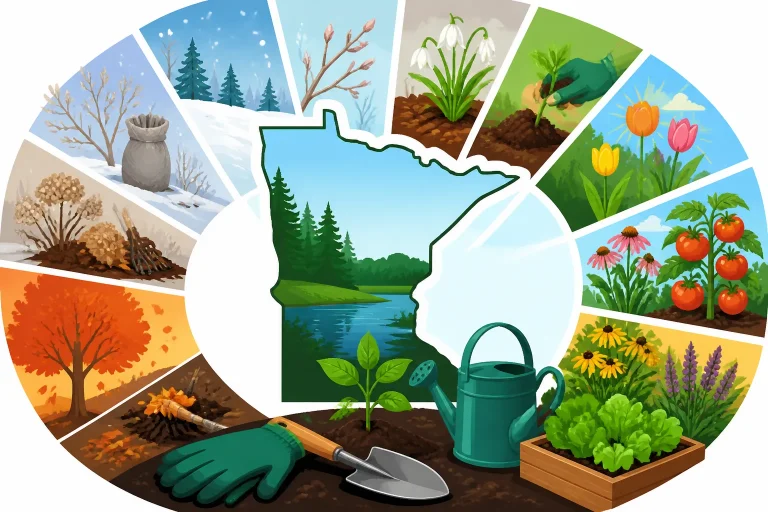
A flexible Minnesota garden calendar by season
A seasonal calendar works best when it describes what to watch for rather than assigning every crop a single day. Use the sequence below as a framework, then adjust for your region, garden site, and the conditions in the current season.
Early spring: prepare before the bed is ready
While outdoor beds are still wet or frozen, review the seed packets, sort crops by cold tolerance, and plan where each will go. Check stored seeds for age and condition. If you are starting plants indoors, match sowing time to the crop’s growth rate and the likely period when it can safely go outside. Starting too early can leave plants crowded or overgrown before the garden is ready.
As snow recedes, observe the site rather than rushing to dig. Note where meltwater collects and where the ground dries first. When the soil has drained enough to work, prepare only the area you need. Avoid walking on wet beds or turning wet soil in an attempt to get ahead.
Some cool-season crops can be planted before tender crops, but the order is not a reason to ignore soil condition. A bed may be suitable for one crop and still too cold or damp for another. Consult Minnesota Vegetable Planting Calendar by Region when you need to coordinate a particular crop with local timing.
Spring: plant in waves
Rather than trying to plant the whole garden in one weekend, divide the work into waves. Start with crops that tolerate cool conditions once the soil is workable. Keep warm-season crops for later, when the soil and forecast better suit them. This approach reduces the chance that one spell of unpredictable weather affects every crop at once.
For each planting, check the forecast and the bed. If the soil is sticky, wait. If the crop needs warmth, do not let a warm afternoon rush the decision. If a cold night is forecast, consider delaying a tender transplant or using a suitable protective structure. A cover can buffer some conditions, but it should not be treated as a guarantee against every freeze.
Planting by waves also makes it easier to see what is working. If one sowing fails to germinate well, you have time to assess the cause and decide whether to try again. If the first round of greens matures quickly, another sowing can extend the harvest rather than producing more food than you can use at once.
Early summer: settle in heat-loving crops carefully
When the weather begins to feel summery, gardeners often want to finish planting the remaining warm-season crops. First confirm that the soil has warmed and that the plants have adjusted to outdoor conditions. A transplant moved from a protected space may need time to recover after exposure to wind or full sun.
Avoid relying on a holiday as a universal planting signal. The same date can bring very different soil and overnight conditions in different parts of Minnesota. Why Mother’s Day and Memorial Day Are Not Minnesota Planting Guides explains why fixed calendar markers can mislead gardeners, especially when planting tender crops.
After transplanting, watch for signs of stress. Temporary wilting during a hot part of the day may have several causes, including transplant shock, dry soil, wind, or heat. Check the soil near the roots before deciding what is wrong; a wilted plant does not always need more water. Keep new transplants from drying out while they establish, and protect them from conditions that exceed their tolerance.
Midsummer: plan for fall while tending summer crops
Midsummer is not too late to plant everything, but the choice of crop and the remaining growing time matter. Some quick-maturing greens and root crops can fit a later window; crops that need a long warm season may not. Read the days-to-maturity information as an estimate, not a promise, and account for the fact that growth can slow as days shorten and conditions change.
Work backward from the harvest you want. Consider how long the crop typically needs, how much time is left before cold conditions are likely, and whether you can protect it as the season ends. A late sowing may produce small, tender leaves rather than a mature full-size crop. That can still be useful if you plan for it.
For crop choices and timing, see Minnesota Midsummer Planting Guide for Bountiful Fall Harvests. Succession planting can help spread harvests: sow a small amount at intervals instead of planting the entire quantity at once. Keep watering consistent during germination, especially when summer soil dries quickly.
Fall: protect what can still grow, and prepare for next year
As autumn approaches, keep harvesting crops that are ready and remove plants that are diseased or no longer productive. Some cool-season crops tolerate light cold better than tender summer crops, but their growth and quality still depend on the weather and the protection available.
A cover or cold frame can extend the harvest window, but it cannot provide unlimited warmth. Choose crops that can make use of the added protection, and check covered beds regularly. On sunny days, enclosed structures can become warmer than expected; ventilation may be needed to prevent overheating. Before a cold night, make sure any cover is secured and has enough room to avoid pressing on plants.
Fall is also a useful time to note which areas stayed wet, which crops matured on schedule, and where frost arrived first. Those observations can guide next season’s choices. For practical options, see Extending the Minnesota Growing Season with Cold Protection.
How region, soil, and microclimate change the schedule
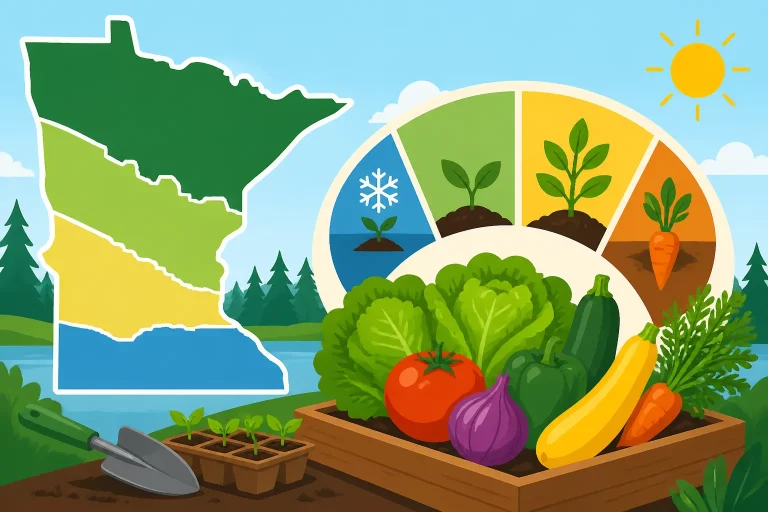
Minnesota is large enough that a schedule that works well in one area may be unreliable elsewhere. Northern gardeners generally need to allow for a shorter growing season and cooler conditions than gardeners farther south. The exact difference varies with location and year, so avoid shifting a schedule by a fixed number of days without considering local conditions.
Regional guides help narrow the starting point. They still need to be adjusted to the yard. A sunny, well-drained bed may warm faster than a shaded bed with heavy soil. A garden exposed to wind may be slower to support young transplants than one beside a sheltered structure. A slope and nearby water can also affect temperature and drainage.
Use a regional calendar to identify a reasonable window, then check your site for the cues that matter:
- Is the bed dry enough to work without smearing or clumping?
- Is the soil warm enough for the crop, especially if sowing a warm-season seed?
- Are overnight conditions suitable for the crop’s tolerance?
- Is the planting location exposed, shaded, low, or sheltered?
- Can you protect the planting if conditions turn colder than expected?
- Does the crop have enough time to mature before the end of the growing season?
Hardiness zones have a different role. They help estimate winter survival for perennials and woody plants, but they are not a vegetable planting calendar. A plant’s hardiness rating does not guarantee that it will thrive in a wet, windy, shaded, or otherwise unsuitable site. Learn how to interpret the map in Minnesota Plant Hardiness Zones Map: How to Read Your Zone, and use planting calendars and local weather cues for seasonal decisions.
Raised beds, containers, and protected structures
Raised beds can be convenient because they are accessible and often drain more readily than in-ground soil. They may warm earlier in spring, but that advantage depends on the bed’s exposure, construction, soil, and moisture. A raised bed can also cool more quickly at night and dry out faster in hot weather.
Containers provide flexibility: they can be moved out of harsh wind or into a more sheltered spot. Their limited soil volume also makes them more vulnerable to temperature and moisture swings. A container that feels warm in afternoon sun may cool rapidly after sunset. Check moisture more often than you would in a deep in-ground bed, but do not water by habit alone; check the growing medium first.
Cold frames and low tunnels can create a more favorable environment for selected crops. They are tools for moderating conditions, not substitutes for matching crop and season. Their performance depends on materials, ventilation, exposure, and how well they are secured. For setup and use, see Using Cold Frames and Low Tunnels to Extend the Vegetable Season.
When to hold off—and what to do instead
Waiting can feel like losing time, especially when seedlings are ready or neighbors have begun planting. But putting a crop into unsuitable conditions can create more work than a short delay. A plant that is cold-stressed, waterlogged, or exposed to a sudden change may take longer to recover than a plant that goes into the garden when conditions are more favorable.
Hold off when:
- The soil is too wet to work. Wait for drainage rather than compacting the bed.
- The crop’s preferred soil conditions are not met. A sunny afternoon does not warm the whole planting depth.
- Cold nights threaten a tender crop. Delay planting or prepare appropriate protection rather than assuming the risk has passed.
- A transplant has not been hardened off. Give it time to adapt before moving it into exposed conditions.
- The forecast signals a sharp change. A brief delay may be easier than repairing damage after cold, wind, or heavy rain.
- The bed is not prepared. Clear weeds, plan spacing, and water the soil as needed before sowing instead of rushing the planting.
Use waiting time productively. Label seeds, check the layout, prepare supports, and make sure protective materials are ready. If an indoor transplant is growing too large, assess whether it needs more light or room rather than putting it outdoors into conditions it cannot tolerate. If you direct-sow later than planned, consider whether a faster-maturing crop or a smaller harvest target makes more sense.
If you planted too early
If a cold spell follows planting, first identify what is exposed and how vulnerable it is. Do not assume every plant is lost. Some crops can withstand cool conditions better than others, while tender plants may be damaged even without a hard freeze. Wait until the weather settles enough to assess the plant. Remove only clearly dead or damaged growth when it is appropriate to do so, and avoid disturbing roots unnecessarily.
If seeds fail to emerge, consider the possible causes before sowing again. Soil may have been too cold or too wet, seeds may have dried out, or heavy rain may have moved them. A small test sowing can help you judge conditions before replanting a whole row. For transplants that stall, check moisture, exposure, and root-zone conditions; adding more water without checking can make a wet bed worse.
Protective covers can reduce exposure to some cold conditions, but they need to be suited to the situation and installed properly. Do not assume that a light cover will protect a crop from every temperature. For help comparing options, see Extending the Minnesota Growing Season with Cold Protection.
Build a planting plan that can change
A reliable garden schedule is one you can revise. Start with a regional calendar, then add notes for your yard. Write down when the ground became workable, when you sowed each crop, how quickly it emerged, and whether it handled the weather well. Use those notes to make better decisions next season instead of relying on memory or copying a schedule from a different region.
Keep the plan flexible by grouping crops according to their needs. Make separate lists for cool-season crops, warm-season seeds, tender transplants, and fall plantings. For each group, note the conditions that need to be in place before planting. This is more useful than a single checklist of dates because it still works when spring arrives early or late.
A practical decision process is:
- Choose the crop and planting method. Decide whether it should be direct-sown or transplanted.
- Check a regional planting window. Use it to decide when to begin monitoring conditions.
- Inspect the bed. Confirm that the soil is workable and appropriate for the crop.
- Check the forecast. Consider overnight lows and changing weather, not just daytime warmth.
- Prepare protection if needed. Make sure covers or structures are ready before a cold night arrives.
- Plant a manageable amount. Stagger sowings when that suits the crop and your harvest needs.
- Observe and adjust. Track emergence, plant health, and local conditions, then revise the next planting.
Do not treat every delay as a failure. Waiting for the soil to drain, the ground to warm, or a risky forecast to pass is part of good timing. A planting calendar helps you make a plan; observation helps you decide whether the plan still fits.
Frequently Asked Questions
Is there one best date to start planting in Minnesota?
No. Minnesota’s conditions vary by region, year, and garden site. Use a regional planting calendar as a starting point, then check soil workability, soil warmth, frost risk, and the crop’s tolerance.
Can I plant after the last expected frost?
A frost estimate is a probability, not a guarantee that frost cannot happen afterward. Also consider soil temperature and nighttime conditions. Some crops need warmer conditions even when frost is no longer likely.
Does a hardiness zone tell me when to plant vegetables?
No. Hardiness zones help assess winter survival for perennial and woody plants. Vegetable planting timing depends more on crop tolerance, soil conditions, frost risk, and local growing-season length.
Should I plant if the air is warm but the soil is cold?
Not necessarily. Warm air does not mean the root zone is warm enough for every crop. Check the soil at planting depth and follow guidance appropriate to the crop.
Are cold frames and row covers a guarantee against frost?
No. Protective structures can moderate conditions, but how well they work depends on the materials, setup, weather, and crop. Choose protection for the conditions expected and check the structure regularly.
Disclaimer
This article is for general informational purposes only and does not constitute professional advice. Laws, prices and regulations vary by location and change over time. Consult a qualified professional for guidance on your specific situation. Minnesota Gardening Guide is not a government agency and is not affiliated with any university extension, state department of agriculture or other government agency.