Understanding USDA Plant Hardiness Zones for Minnesota Gardens
A plant label’s hardiness zone can help you judge whether a perennial, shrub, or tree is likely to survive winter, but it cannot tell you everything about how that plant will fare in a Minnesota yard. This guide explains how to read the USDA map, why nearby gardens can behave differently, and how to use a zone as one useful clue rather than a planting guarantee.
What a USDA Plant Hardiness Zone Tells You
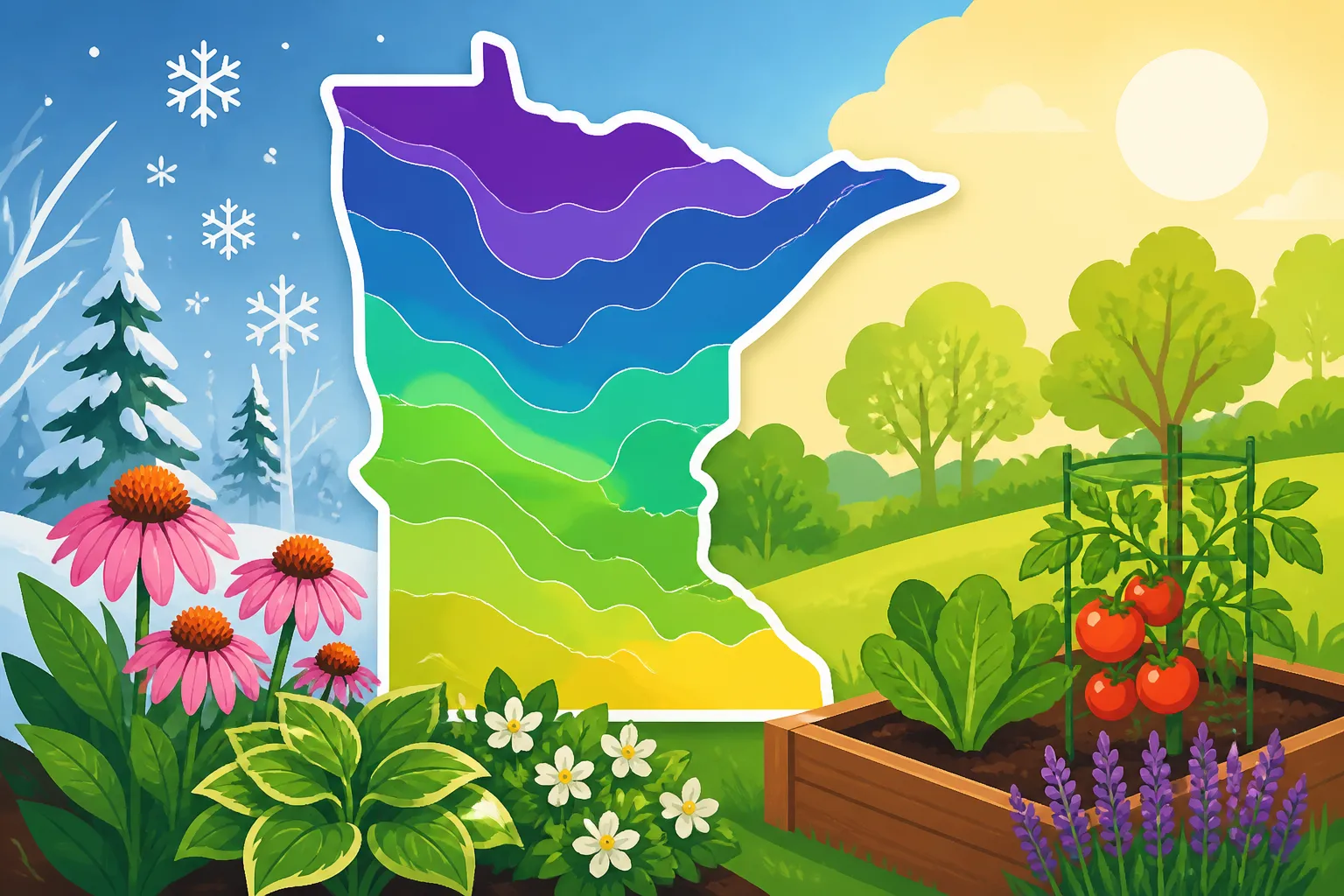
The USDA Plant Hardiness Zone Map groups locations according to their average annual extreme minimum winter temperature. It is a way to compare the coldest part of a typical winter across regions. It does not describe the average temperature for the whole winter, the lowest temperature ever recorded, or the weather a particular garden will have this year.
The map divides areas into zones, with each zone split into two half-zones. A plant tagged for a particular zone is generally expected to tolerate winter cold in locations that fall within that range, assuming it is established and otherwise growing under suitable conditions. The label is most useful when comparing the cold tolerance of woody plants and perennials that remain outdoors over winter.
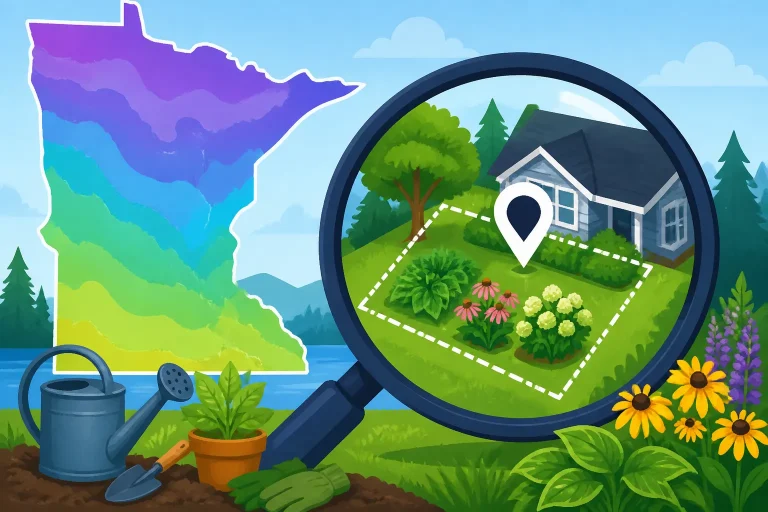
The USDA map is a regional guide, not a measurement of every yard. ZIP codes and broad areas fall in a zone on the USDA Plant Hardiness Zone Map, but a ZIP code search can’t account for every hill, slope, lake breeze, or sheltered corner. For an individual planting spot, the map gives a starting point; the conditions around the plant help explain what happens next.
Use the rating as a screening tool:
- If a plant’s listed hardiness is less cold-tolerant than the zone shown for your location, it may be at greater risk of winter injury.
- If a plant’s rating indicates it tolerates colder conditions than your location typically experiences, it may be a more dependable candidate for winter survival.
- If a plant is near the edge of its listed hardiness, look closely at exposure, drainage, snow cover, and the plant’s particular needs before choosing it.
A hardiness rating is not a complete growing recommendation. A plant can survive the minimum winter temperature and still fail because its soil stays too wet, it receives too much shade, it needs more growing-season warmth, or its flowers and fruit are damaged by a late freeze. Likewise, a plant that is technically marginal may persist in a protected spot but struggle in an exposed one.
For help locating your area on the map, see Minnesota Plant Hardiness Zones Map: How to Read Your Zone and Finding Your Exact Yard on the USDA Plant Hardiness Zone Map. For a closer look at how map labels should guide plant selection, What a Zone 5a Label Really Means for Minnesota Gardeners explains why the label is useful without being a promise.
Why a Hardiness Zone Is Not a Planting Calendar
A hardiness zone describes a winter-temperature pattern. It does not tell you when to sow seeds, move seedlings outdoors, or plant a heat-loving crop in spring. Those decisions depend on seasonal conditions such as frost risk, soil temperature, and whether a plant can tolerate chilly nights.
This distinction matters in Minnesota, where the same plant may be able to survive winter once established but still be sensitive to cold during spring growth. A perennial might be winter-hardy yet lose new shoots to a late freeze. A vegetable may be suitable for a Minnesota garden but need warm soil before it will germinate or grow well. Knowing a zone does not remove the need to assess conditions at planting time.
| Question | Does the hardiness zone answer it? | What else to consider |
|---|---|---|
| Is a perennial or woody plant likely to tolerate typical winter cold? | It can help estimate that risk. | Exposure, soil drainage, snow cover, establishment, and plant health |
| Is the soil ready for planting? | No. | Soil moisture, temperature, and whether the soil is workable |
| Is it safe to put a tender plant outdoors? | No. | Forecasts, frost risk, plant sensitivity, and protection options |
| Will a vegetable have time to mature? | No. | Crop maturity time, planting date, and likely fall freezes |
| Will a plant flower or fruit well? | No. | Light, heat, pollination, moisture, and seasonal timing |
For vegetable gardeners, a planting calendar should be based on crop needs and local conditions, not the winter hardiness rating alone. Use Minnesota Garden Timing: Knowing When to Plant or Hold Off to think through the conditions that matter before digging or sowing. Minnesota Frost Dates: Tracking Spring Thaw and Fall Freezes can help frame frost risk, while remembering that frost dates are probabilities, not fixed dates.
The difference is easy to see in practice. A plant label may indicate that a shrub can tolerate winter cold, but it will not say whether the ground is dry enough to plant it, whether a warm spell has prompted tender growth, or whether a forecast freeze could injure new leaves. For a vegetable seed, a hardiness rating is even less helpful as a timing tool: the seed’s preferred soil conditions and the crop’s growing period are the more relevant guides.
If you are planning a mixed garden, use two separate questions:
- Will this plant likely survive winter here? Start with the hardiness rating and then evaluate the planting site.
- When should I plant it? Use its growth requirements, the season, and current conditions.
That separation keeps the zone from doing a job it was not designed to do. It also helps avoid treating one familiar date or one warm stretch as a signal that every plant is ready to go outdoors.
How Minnesota Yard Conditions Change the Picture
Two planting spots can experience different conditions even when they are close together and fall within the same mapped zone. A map assigns a broad regional category; it does not show the temperature, wind, soil, or snow conditions at each bed. The word microclimate describes these smaller-scale differences.
A sheltered spot beside a building may be less exposed to cold wind than an open garden. A sunny, south-facing wall may warm earlier in spring. A low area can collect cold air, while a slope can allow it to drain away. A nearby body of water may influence local conditions, though the size and direction of that effect depend on the site. Understanding Microclimates When Reading Your USDA ZIP Code Zone offers more ways to think about these local differences.
Exposure and cold-air movement
Wind exposure can make winter conditions harder on plants by increasing drying and stress, especially for evergreen foliage. A fence, building, or established planting may reduce exposure, but a sheltered site is not automatically ideal. It may also receive less sun or have limited air movement. Consider the conditions across the entire year, not just whether the location seems warm in winter.
Cold air tends to settle in low areas. If a yard has a dip or a garden sits at the bottom of a slope, it may be more vulnerable to cold nights than a nearby higher spot. This is one reason that a general regional label cannot accurately describe every corner of a property. Why Cities and Hills Shift Your Garden Beyond Regional Zone Lines explores how terrain and urban surroundings can affect garden conditions.
Sun and reflected heat
Buildings, pavement, fences, and walls can absorb and reflect heat. A sunny, protected area may warm sooner than an exposed bed, which can extend the useful season for some plants. The same warmth can also encourage a plant to break dormancy earlier. If a cold snap follows, new growth may be more vulnerable than it would be in a cooler location.
A sunny wall is not a dependable way to make a marginal plant safe. The reflected heat may help during some conditions, but the plant still faces winter cold, changing temperatures, and the needs of its roots. Treat warm microclimates as a possible advantage, not a substitute for matching a plant to the site.
Soil and drainage
A plant’s roots experience the soil around them, not the zone printed on a label. Soil that drains poorly can leave roots stressed or damaged, while a dry site can make it harder for a new planting to establish. The texture, structure, and moisture of the soil influence how well a plant grows and how it enters winter.
Raised beds, slopes, and compacted areas can differ from nearby ground in how quickly they warm and how they hold water. Before choosing a spot, notice whether water stands after rain, whether the soil dries quickly, and whether the area is difficult to work when wet. A suitable hardiness rating cannot compensate for a site that does not meet the plant’s soil needs.
Snow cover and winter drying
Snow can insulate the ground and protect low-growing plants, but it is uneven. Wind may leave one bed exposed while piling snow in another. Evergreen plants can also lose moisture during winter, especially when exposed to sun and wind. These factors help explain why a plant may survive in one location but suffer in another that has the same map label.
The practical takeaway is to assess a plant’s exact spot. If the site is exposed, poorly drained, or prone to little snow cover, choose plants with a comfortable margin of cold tolerance rather than relying on a borderline rating. For other plants, improving the site or choosing a more protected position may reduce stress, though it cannot guarantee survival.
Choosing Perennials, Shrubs, and Trees by Zone
For plants that remain outdoors year after year, the hardiness rating is a sensible first filter. It can help narrow a large list of possibilities before you compare mature size, light needs, soil preferences, water requirements, and maintenance. Think of the zone as a minimum winter-tolerance clue, not the only measure of suitability.
Start with the plant label or a reliable description and check both the hardiness range and the site conditions the plant needs. A plant that tolerates the winter cold but requires a different soil moisture level or amount of sunlight may still be a poor choice. A well-matched plant should suit the location in more than one respect.
Leave some margin when winter survival is important
A plant at the cold-tolerant edge of its listed range may survive in a sheltered, well-drained site but be unreliable in an exposed one. If you want a low-maintenance planting, or a tree or shrub that would be difficult to replace, choosing a plant that tolerates colder conditions than the site typically experiences can reduce risk.
That margin is particularly useful for plants that are costly, slow to establish, or important to the layout. It is not necessary to rule out every borderline plant, but it is worth being honest about the trade-off: a plant near its limit may need a more favorable spot and may be more vulnerable in severe or unusual winters.
For a landscape with a range of conditions, avoid assigning one zone label to every bed and assuming that every plant will perform equally. A sheltered courtyard, an open northern exposure, and a low garden basin can put different stresses on plants in the same yard. Match plants to those conditions rather than choosing solely by the broad map result.
Check more than winter minimums
Hardiness tells you about winter cold tolerance, but other factors affect whether a plant thrives:
- Light: A plant may tolerate winter but fail to flower or grow well without the right sun exposure.
- Soil moisture: Some plants prefer consistently moist ground; others need drainage and may decline in waterlogged soil.
- Summer conditions: The plant’s response to heat, drought, and humidity can matter as much as winter cold.
- Growing season: A plant may need enough time to ripen fruit, set flowers, or complete its growth cycle.
- Pests and disease: A hardy plant can still be vulnerable to local pest or disease pressure.
- Establishment: A new planting may be more vulnerable than a well-established specimen.
If a perennial is hardy but repeatedly performs poorly, consider whether the problem is actually its zone fit. Look at soil, light, moisture, planting depth, competition, and signs of disease before concluding that winter cold is the cause. Why Plant Hardiness Ratings Do Not Guarantee Winter Survival covers this distinction in more detail.
Treat labels as starting points
Plant labels and catalogs vary in how much detail they provide. Some give a hardiness range; others use a general description such as “cold hardy.” Check that the description is specific enough to help with your decision. If a plant is important to your plan and the information is unclear, compare descriptions from dependable gardening references before buying.
Also check whether the rating refers to an established plant and whether the plant has any special winter needs. A plant that benefits from protection, needs a particular drainage condition, or is commonly grown as an annual in colder areas should not be treated like an uncomplicated perennial just because one label gives a hardiness rating.
For a broader look at which plants are suited to Minnesota landscapes, Growing Hardy Perennial Flowers in Minnesota Yards may help you compare choices. If you are planning woody plants, use the rating alongside the plant’s mature size and site requirements, not as a substitute for them.
Using the Map Without Overreading a ZIP Code
A ZIP code can be a convenient way to begin looking up a location, but it represents a broad area. It is not a reading from your garden bed. Nearby areas can have different terrain, exposure, elevation, and built surroundings, and those differences may affect local growing conditions.
When checking the map, look at the location as closely as the tool allows. Zooming in can show that a broad area contains boundaries or transitions that a ZIP-based result may hide. Even then, the map remains regional. It cannot show that one corner of your property is sheltered, another collects cold air, or a third has soil that stays wet.
A careful way to use the map is:
- Find the general area. Use the USDA Plant Hardiness Zone Map to identify the mapped zone for the broader location.
- Inspect the map at a closer scale. If possible, check the position of nearby boundaries rather than relying only on a ZIP code result.
- Compare your own site. Note slopes, low spots, exposure, nearby buildings, and differences in sun or snow cover.
- Check plant requirements. Compare the plant’s listed hardiness with its soil, light, moisture, and seasonal needs.
- Choose according to risk. For a high-value or permanent planting, leave more margin than you might for a small trial planting.
The map is not an exact yard thermometer, and no search result can promise a plant’s survival. It is most effective when combined with what you know about your site and with good plant-specific information. If two parts of the yard behave differently, keep notes about where plants thrive or struggle. Those observations can be more useful for future choices than treating the whole property as identical.
Do not confuse a zone lookup with a weather forecast. The map summarizes a long-term pattern, while a forecast describes anticipated conditions over a much shorter period. Neither one alone answers every planting question. A plant may be hardy for the mapped zone but still need protection from a particular forecast freeze, especially if it has begun growing or was recently planted.
For another perspective on local variation, Finding Your Neighborhood Zone with Interactive USDA Mapping Tools and Checking Minnesota Zone Boundaries with the Quick ZIP Search Tool can help clarify what a location lookup does and does not show. Always use the map as context, then make the final choice for the actual planting site.
Putting Hardiness Zones to Work in a Minnesota Garden
The most useful way to apply the map is as part of a sequence of decisions. Start with winter survival, then check the site, and finally plan the timing. That keeps a zone label from becoming a shortcut for questions it cannot answer.
Before buying a plant
Make a short list of the conditions at the intended planting spot: sun, wind exposure, drainage, slope, and whether snow tends to remain there. Then compare those conditions with the plant’s needs. A small amount of observation before buying can prevent a common mismatch, such as placing a moisture-loving plant in a dry exposed bed or a sun-demanding plant under a dense canopy.
Next, compare the hardiness rating. If the plant is comfortably suited to the mapped area, consider the remaining site requirements. If it is near the edge of its cold tolerance, ask whether the spot is unusually protected and whether you are comfortable with a higher chance of winter loss. Avoid basing that decision on one warm winter or a single sheltered corner.
For permanent plantings, it can be useful to group plants by their needs rather than putting all the plants with similar hardiness ratings together. Two plants that tolerate similar winter cold may differ in moisture needs, sunlight, and mature size. A garden designed around those conditions is more likely to succeed than one arranged only by zone.
Before planting outdoors
Check the season and the plant’s immediate needs. A hardy perennial can still be stressed if planted into soil that is too wet to work, or if it cannot establish before demanding weather. For vegetables and tender annuals, consider frost risk and soil warmth separately from the USDA zone. Should You Plant Now in Minnesota? What to Weigh Before Digging offers a useful way to weigh current conditions.
When the question is whether spring soil is ready, a zone map is not enough. Soil that is workable and not excessively wet is a better sign for digging than a warm afternoon alone. For seeds, soil temperature may be important to germination. Minnesota Soil Warmth and Frost Timing for Vegetable Seeds explains why soil conditions and frost risk are separate parts of planting decisions.
After planting
Keep an eye on how plants respond, especially during their first seasons. Newly planted roots have not yet explored much soil, and plants can be more susceptible to stress while establishing. Water needs, exposure, and root health all influence how well a plant settles in. If a planting declines, investigate the whole growing situation before assuming the zone is wrong.
Record useful observations: where frost damage appears first, which beds remain wet, where snow collects, and whether a particular location is unusually exposed. Make notes about plants that survive and thrive, as well as those that struggle. This local record can help you fine-tune plant choices over time without pretending that a map can capture every yard condition.
If a plant is damaged after winter, look for patterns. Is the injury concentrated on exposed foliage? Are roots affected in a wet area? Did the plant begin growing before a cold spell? Does the damage occur in one location but not another? These clues can point toward exposure, drainage, or seasonal timing rather than an incorrect zone alone.
For vegetables and annual flowers
Annual crops and flowers still need suitable conditions, even if winter survival is not a concern. Their success may depend on warm enough soil, frost-free conditions, adequate time to mature, and their tolerance of cool nights. For that reason, use a Minnesota planting calendar and crop-specific guidance rather than interpreting the hardiness zone as an outdoor planting date.
A zone rating can help with plants that return year after year, but it says little about whether a vegetable seed will germinate quickly in cold soil or whether a tender transplant can handle a chilly night. To plan those decisions, Minnesota Vegetable Planting Calendar by Region and When Is It Safe to Plant Heat-Loving Crops Outdoors in Minnesota? address timing questions that the hardiness map does not answer.
Frequently Asked Questions
Does my USDA zone tell me exactly which plants will survive?
No. It offers a regional estimate of winter cold tolerance, not a guarantee. Plant health, drainage, exposure, snow cover, establishment, and the plant’s other growing needs all affect survival.
Is the zone shown for a ZIP code accurate for my yard?
It is a useful starting point, but it describes a broad area. A yard’s slope, buildings, wind exposure, and other local conditions can create differences that a ZIP code lookup does not capture.
Can I use my hardiness zone to decide when to plant vegetables?
Not by itself. Vegetable timing depends on crop requirements, frost risk, soil temperature, and the length of time the crop needs to mature. Use a regional planting calendar and current conditions for those decisions.
Should I avoid a plant rated near the cold edge of my location?
Not necessarily, but expect more risk. A protected, well-drained site may improve the plant’s chances, while an exposed or wet spot may make success less likely. For a permanent or costly planting, choosing a plant with more cold tolerance is often the safer option.
Why did a plant fail if it was labeled hardy for my area?
The rating addresses winter cold tolerance, not every cause of failure. Poor drainage, unsuitable light, drought, disease, pests, winter drying, or damage to new growth can all contribute. Check the plant and site conditions before deciding that the hardiness rating was the problem.
Disclaimer
This article is for general informational purposes only and does not constitute professional advice. Laws, prices and regulations vary by location and change over time. Consult a qualified professional for guidance on your specific situation. Minnesota Gardening Guide is not a government agency and is not affiliated with any university extension, state department of agriculture or other government agency.